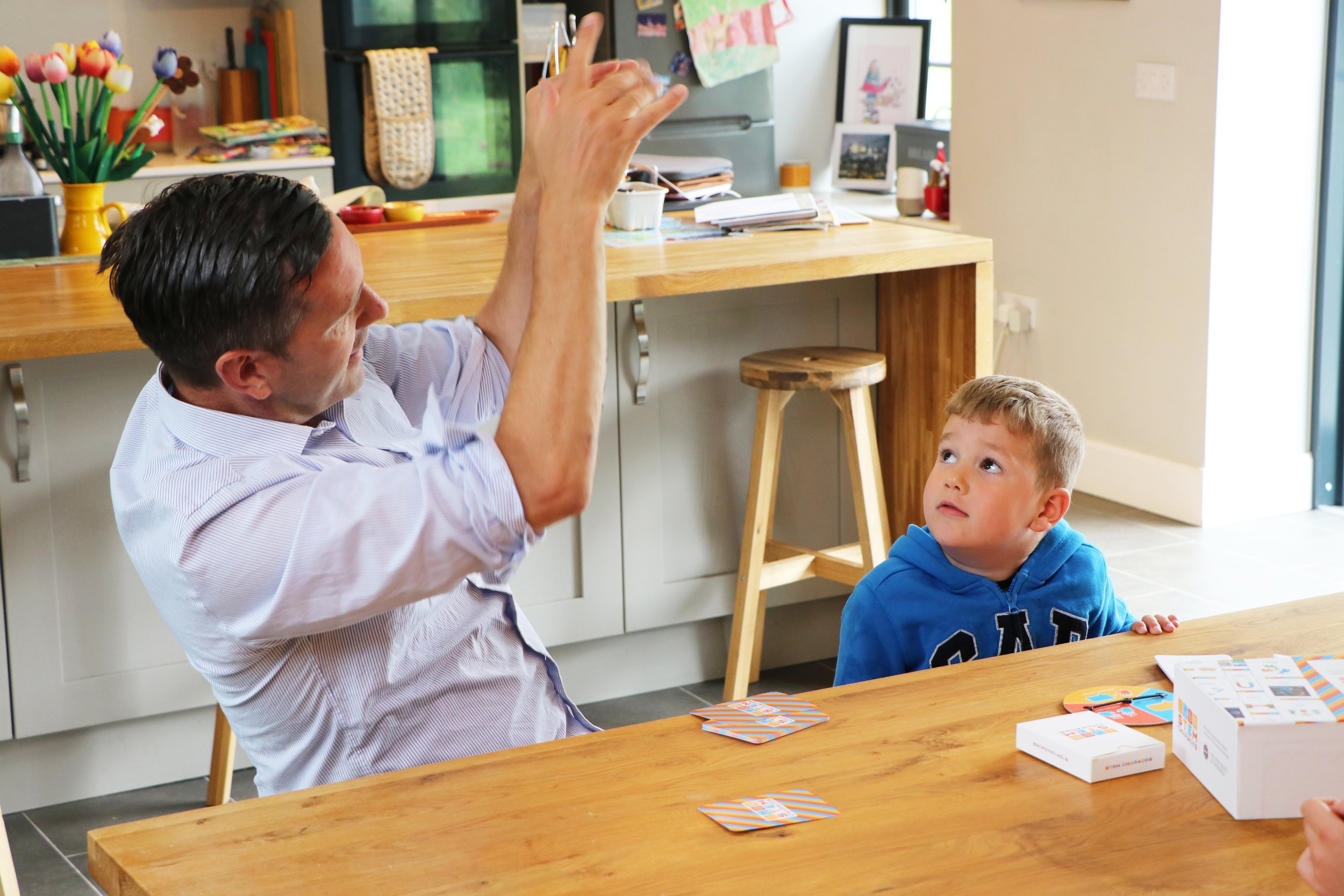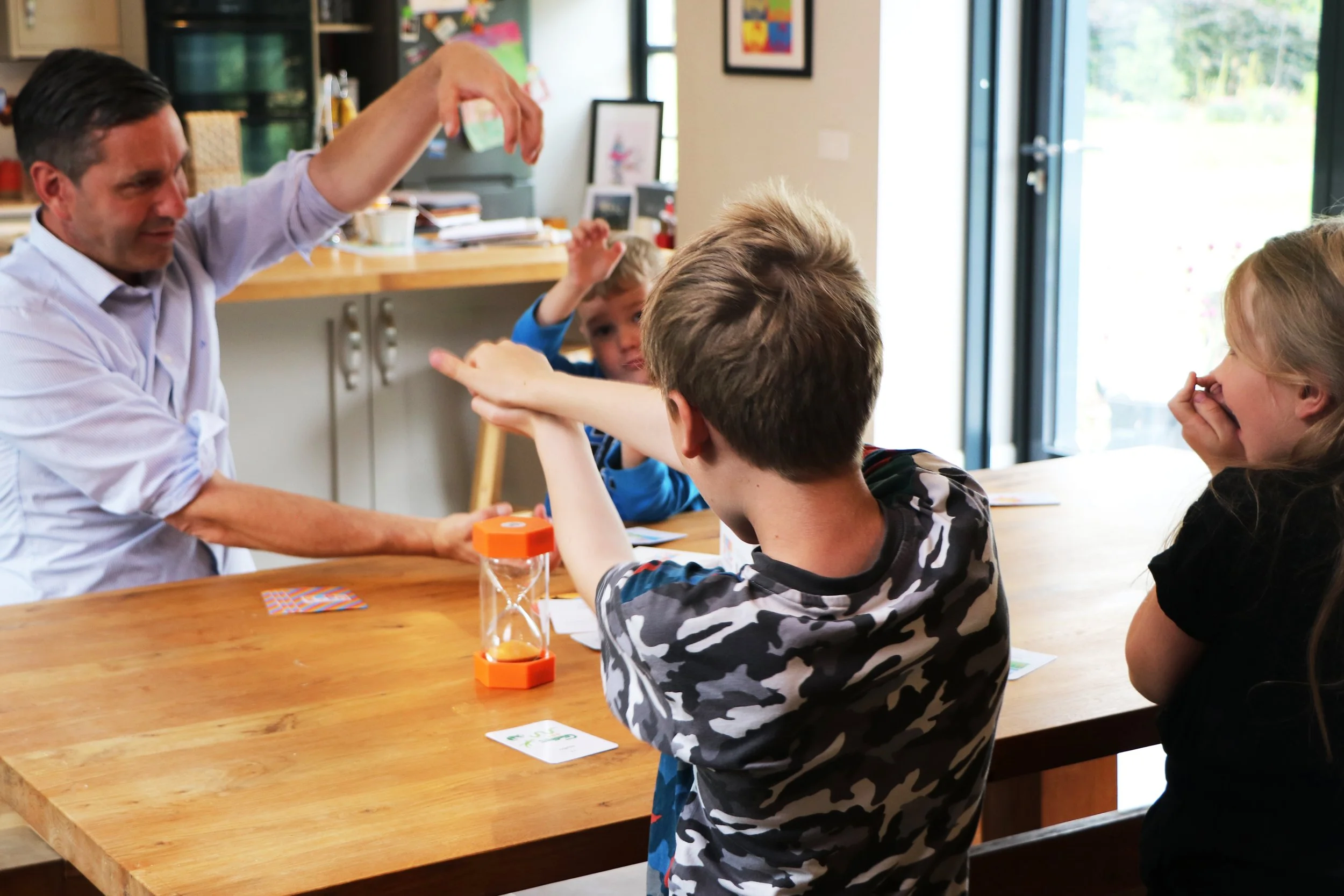

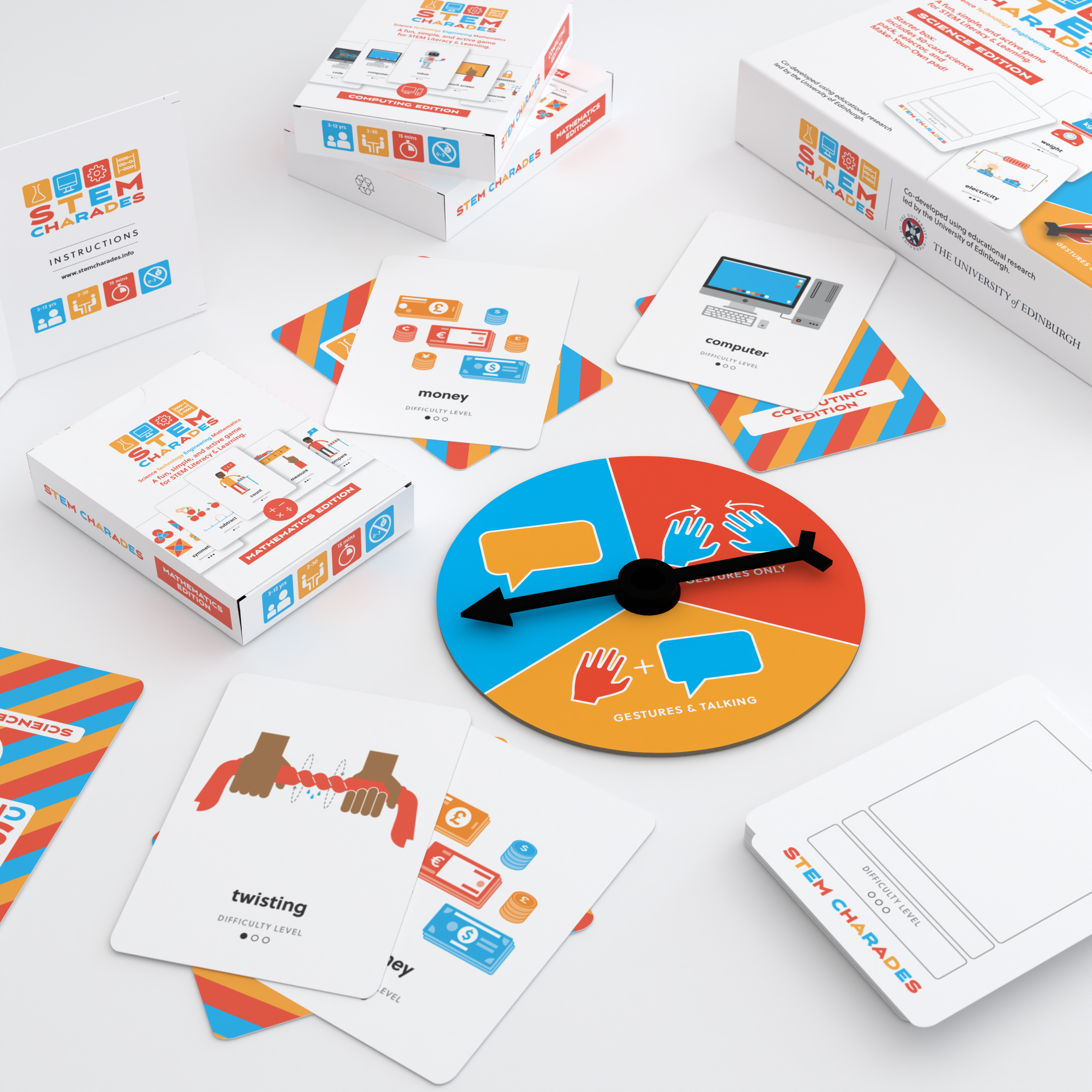
Grounded in cutting-edge pedagogical research at the University of Edinburgh, STEM Charades is a brand new screen-free, unplugged game designed to build children’s confidence and understanding of key STEM concepts.

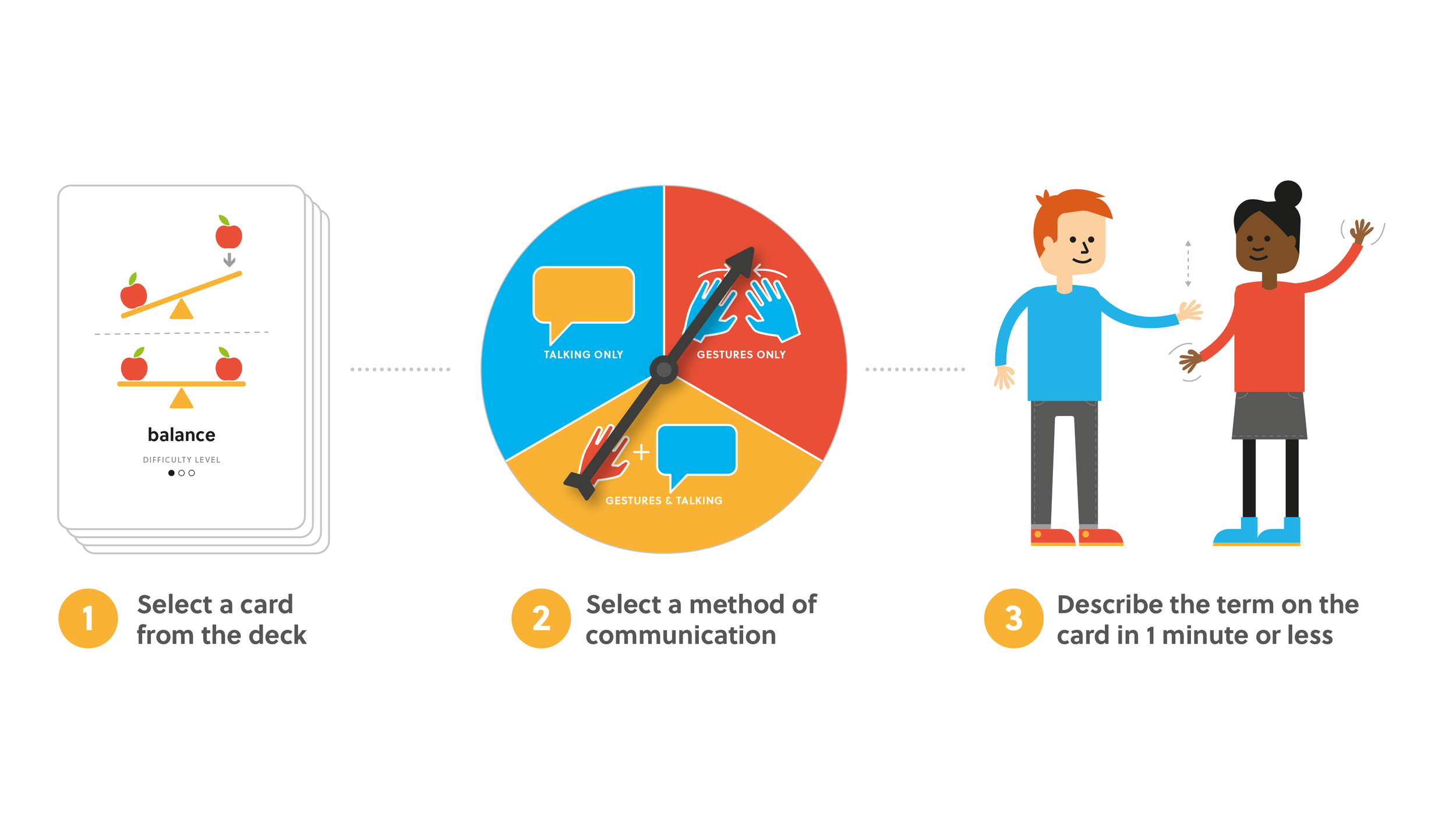
How to play STEM Charades
STEM Charades is a fun, interactive, gesture game that builds communication skills, confidence, and a deeper understanding of Science, Technology, Engineering and Mathematics (STEM).
What are your options?
Explore the different STEM Charades packs and bundles — engaging, curriculum-aligned activities designed to spark curiosity and build subject confidence through play.
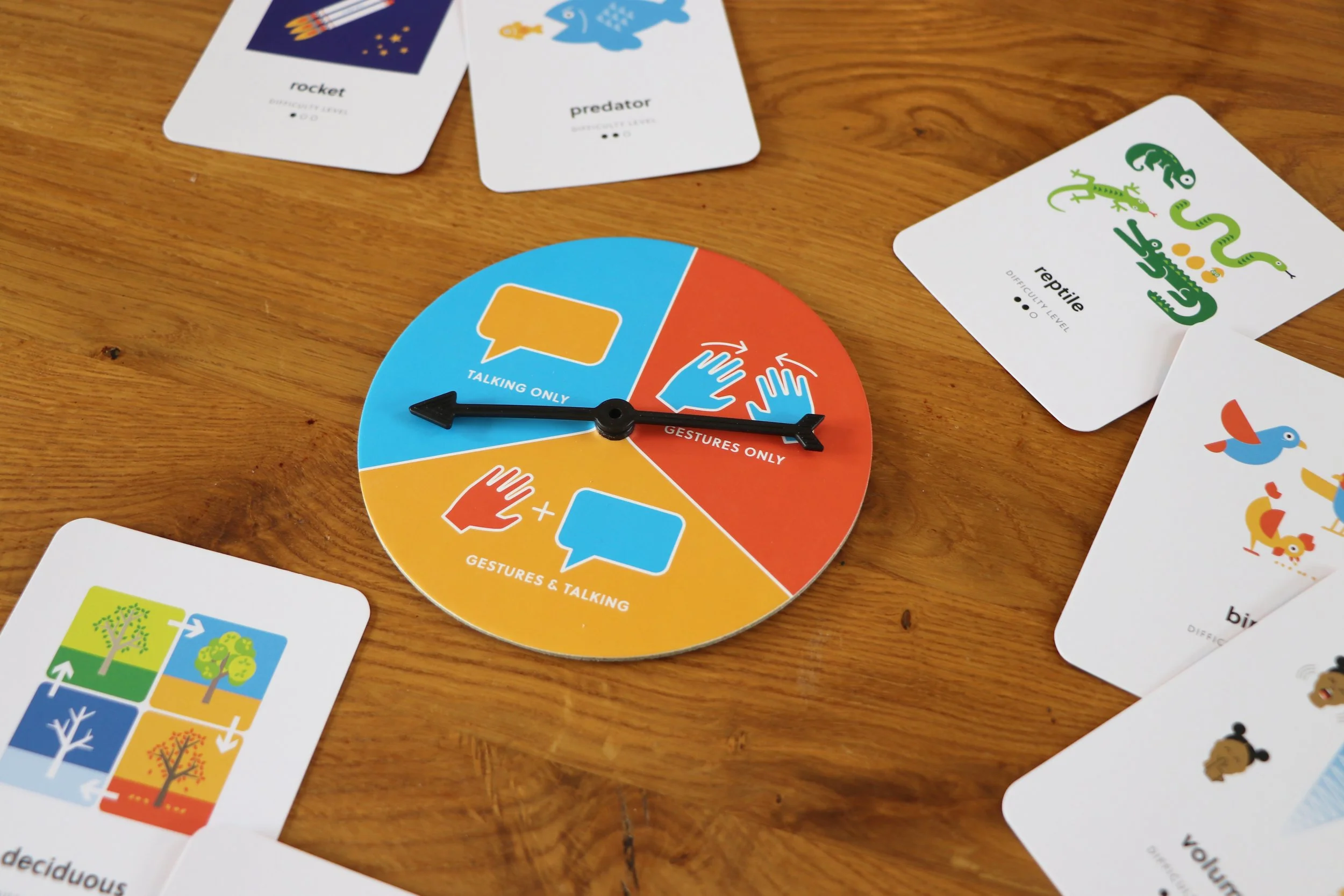
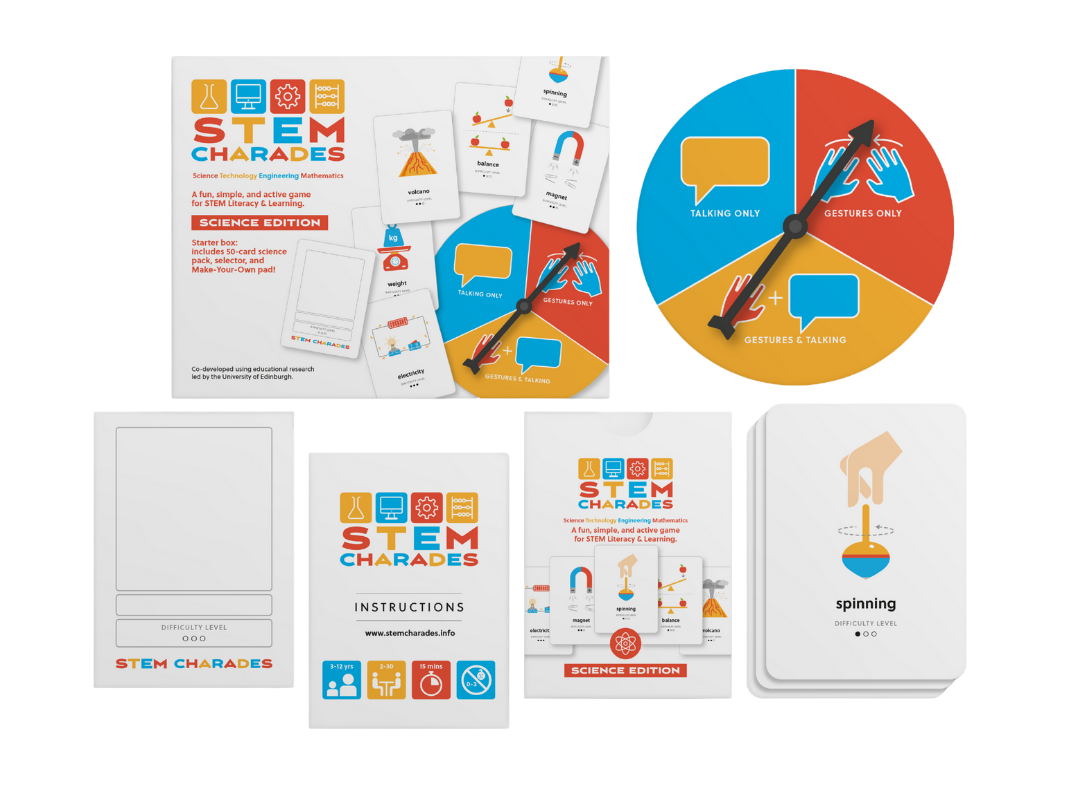
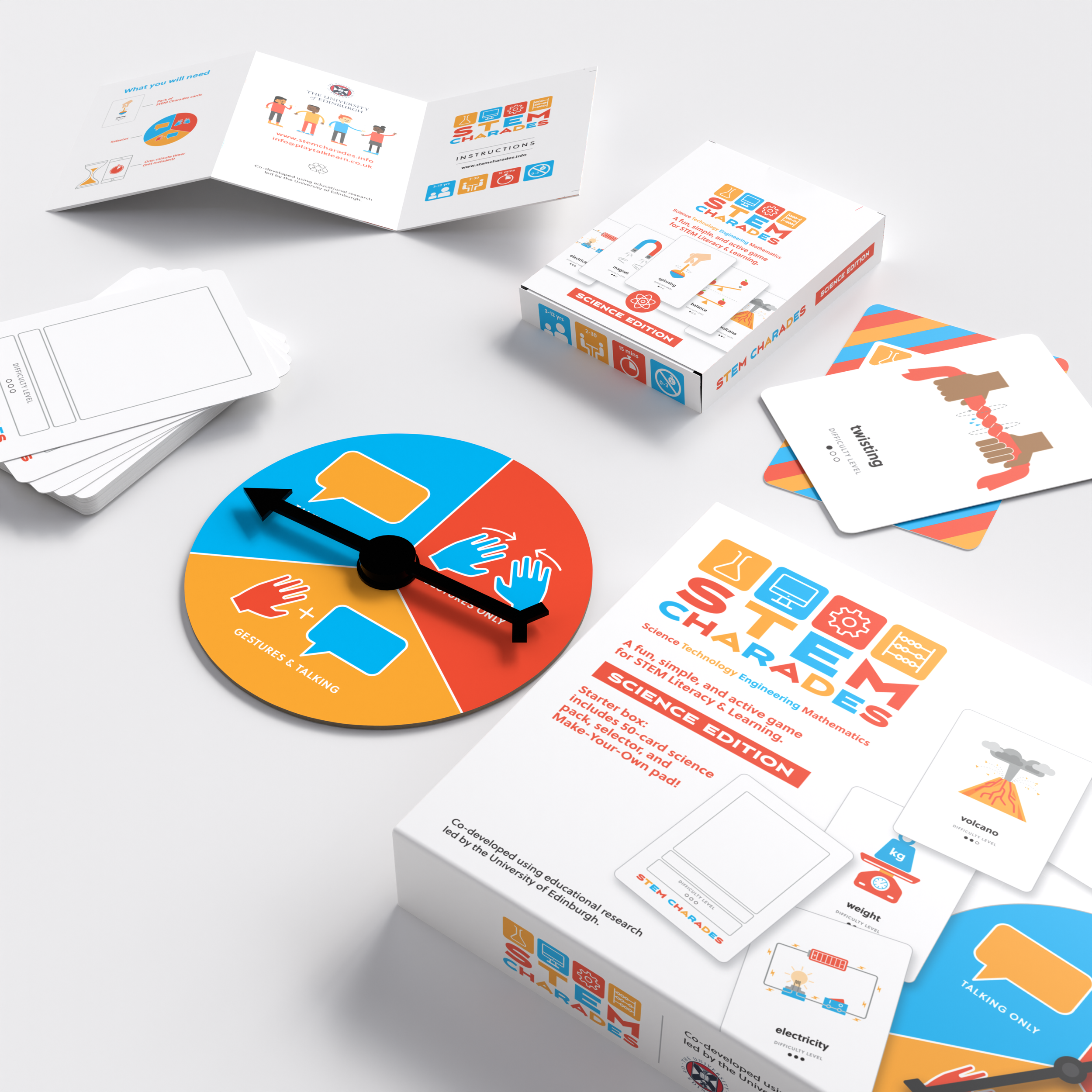
Begin your embodied learning journey with the STEM Starter Box — comes with 50 core science cards, a spinner, a DIY pad and teacher prompts. Everything you need to run ready-made embodied learning sessions to build STEM foundations in young learners.

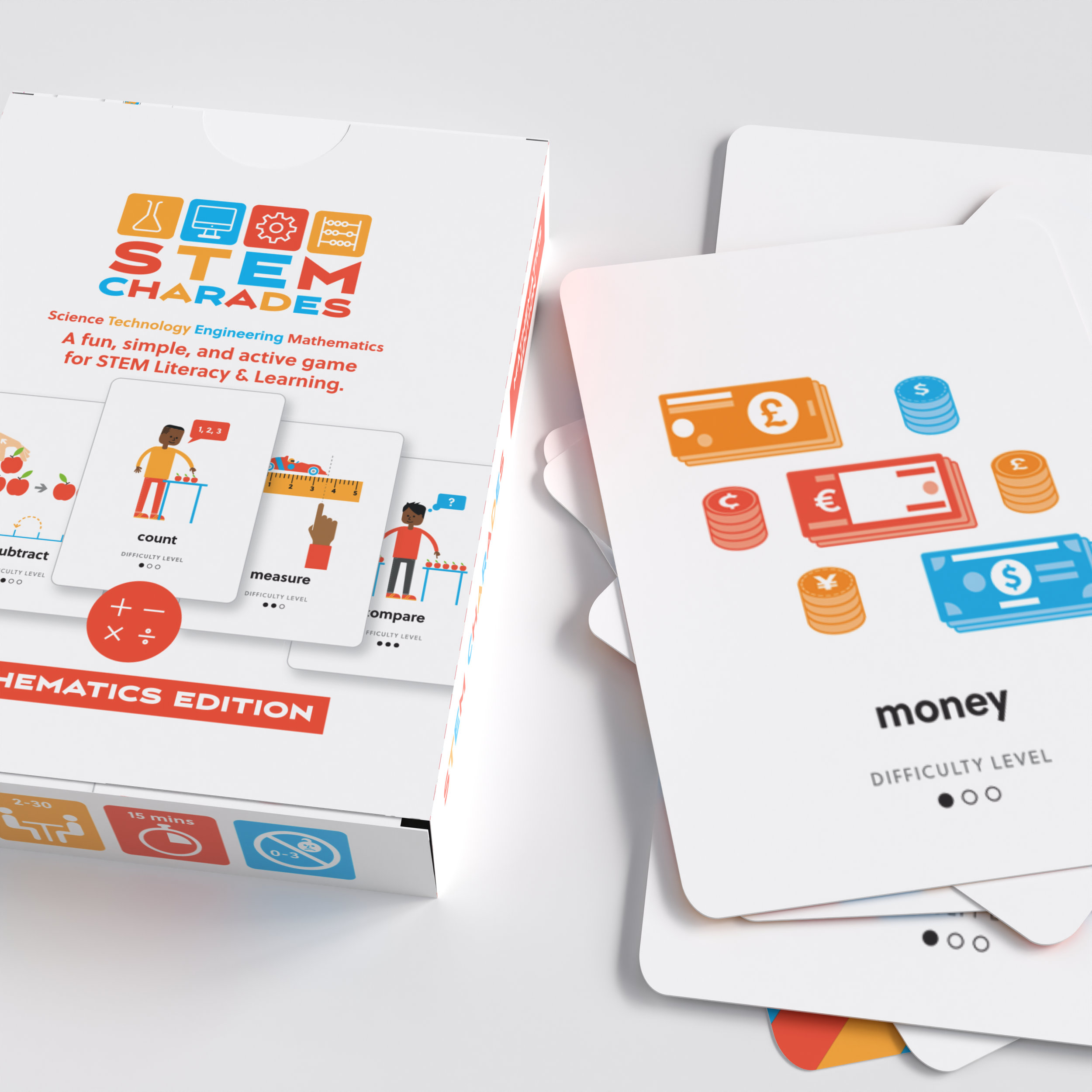
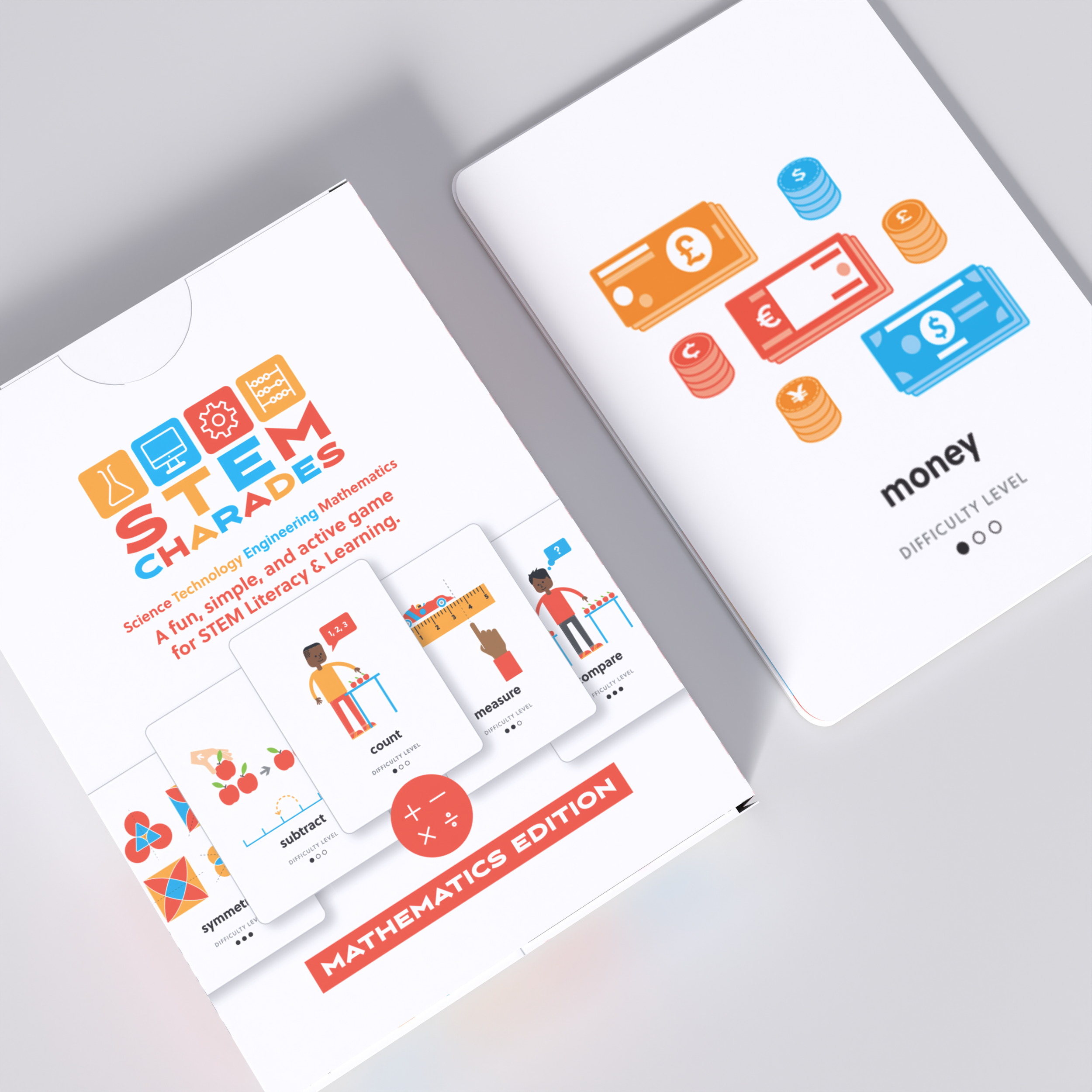
Mathematics pack: Turn abstract maths ideas into active, embodied learningwith these 30 Maths topic cards, covering number, shape, measure and problem-solving terminology from the KS1 and KS2 curriculum
(Please note: the individual packs below do not come with a spinner!)
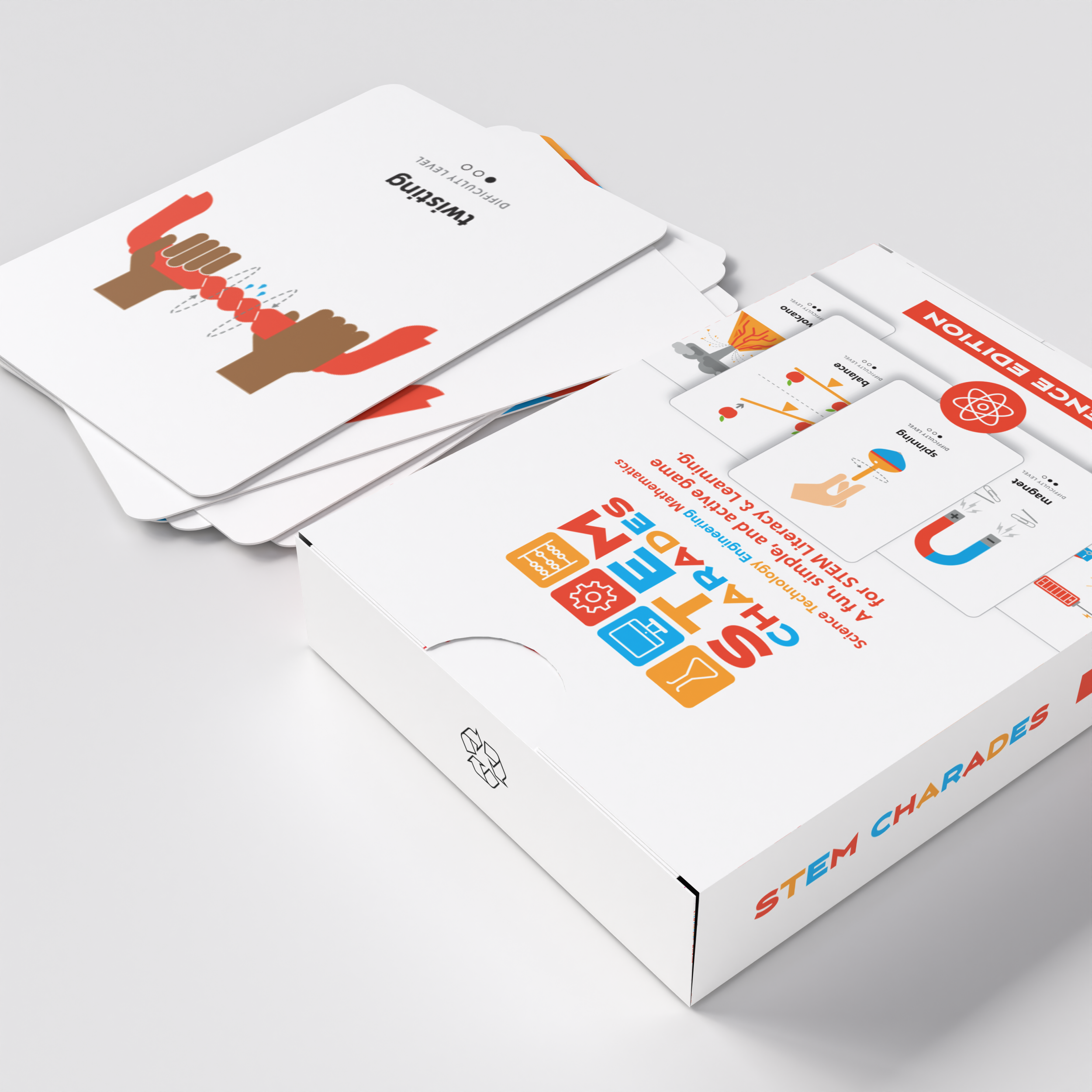
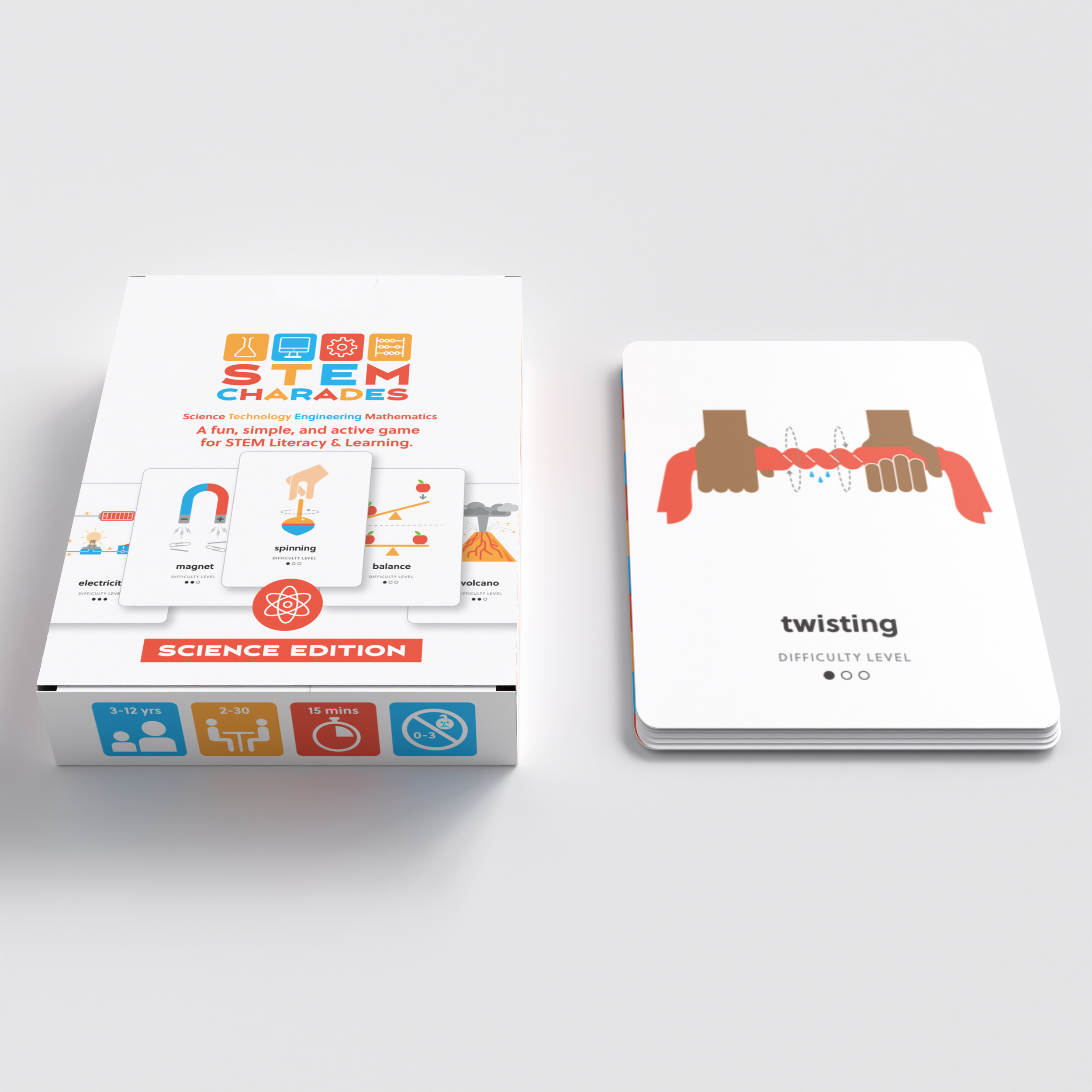
Science pack: Get pupils moving, talking and thinking like scientists, including prompts covering biology, chemistry and physics fundamentals from the KS1 and KS2 curriculums to build confident science talk and collaborative problem-solving.
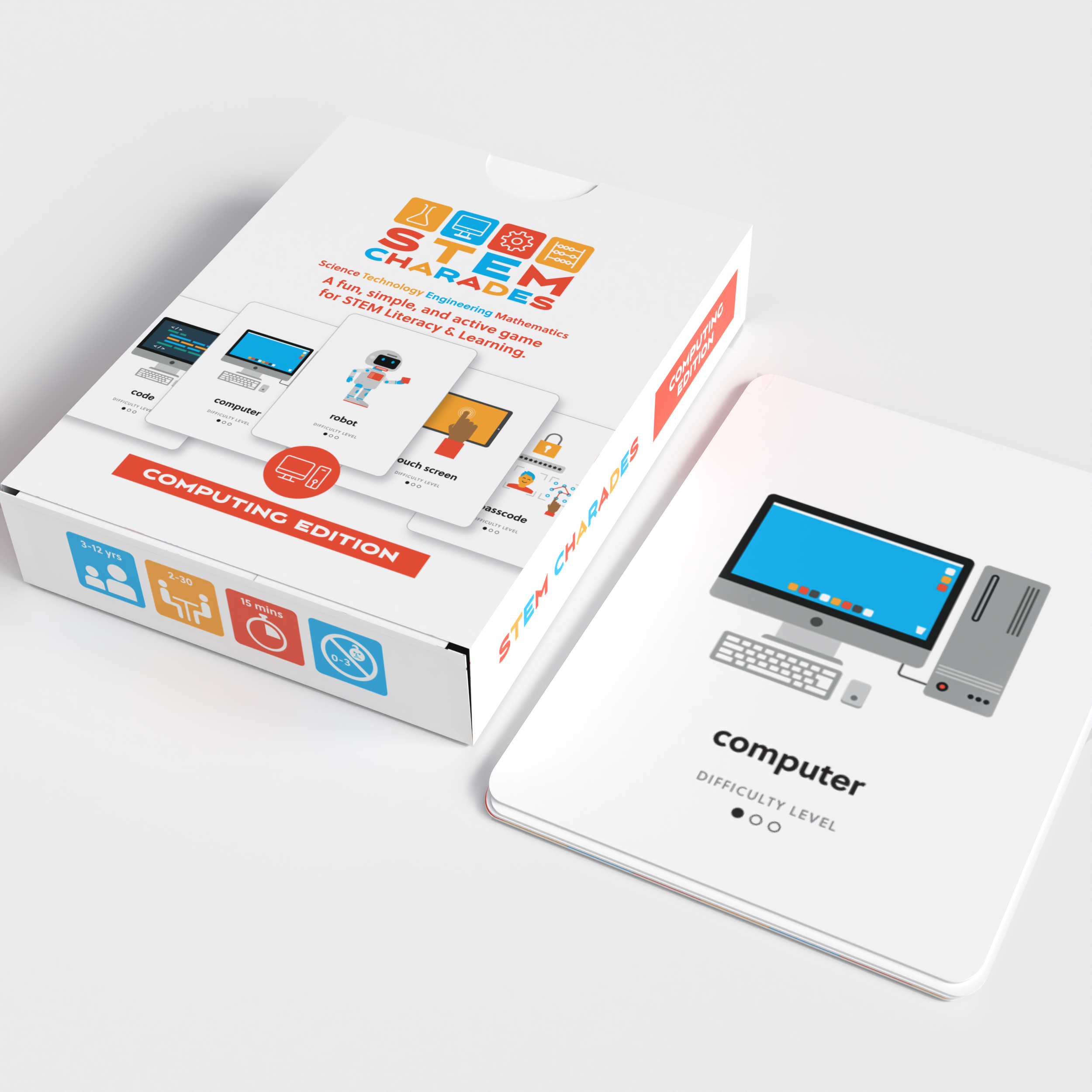
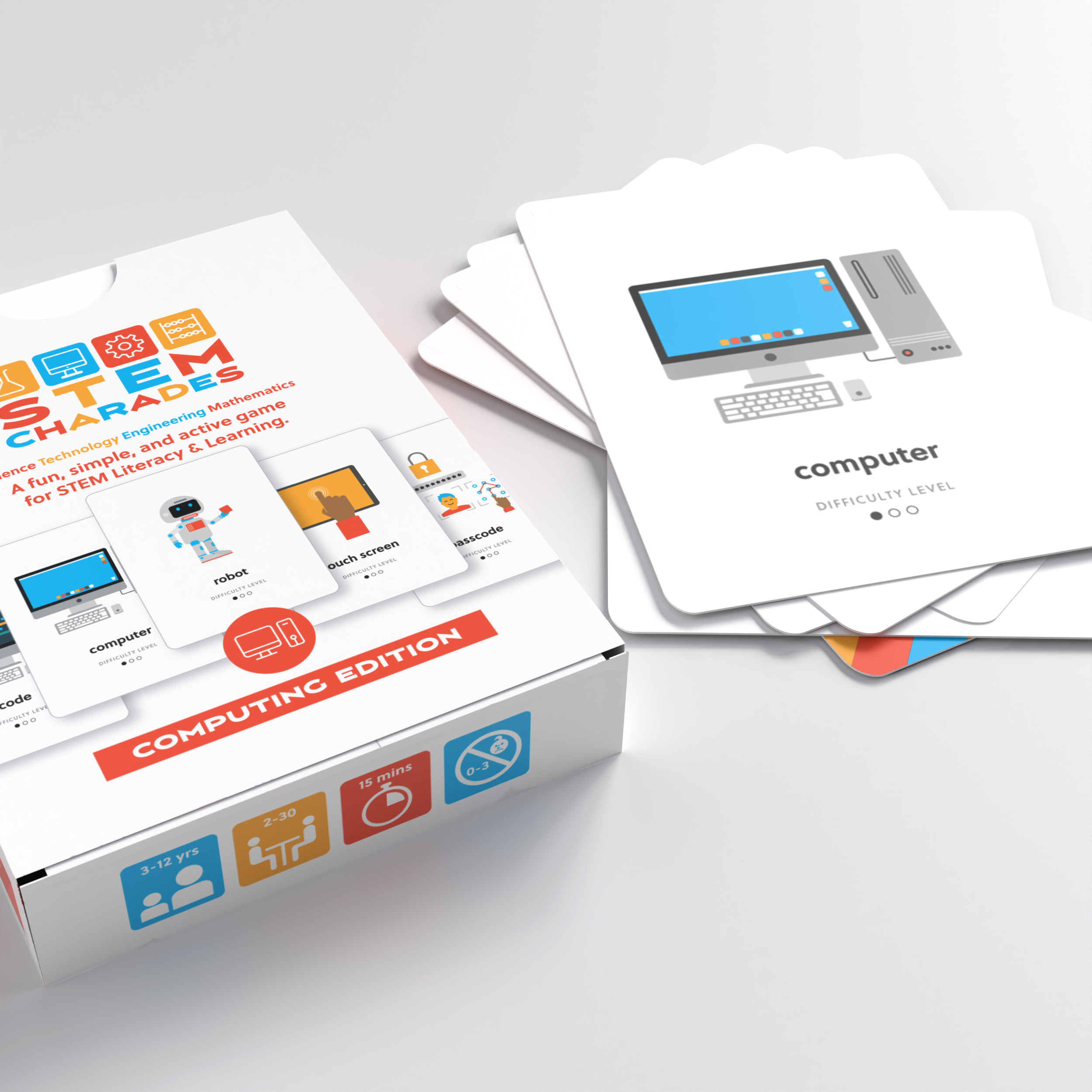
Computing pack: Introduce computing at KS1 and KS2 without using a screen with cards that bring core and abstract computing concepts to life: algorithms, debugging, hardware, and digital citizenship, building computational thinking and teamwork without screens!
Planet Earth pack: Bring Earth science to life with a KS2 climate change and habitats game that gets pupils moving and explaining ideas — no screens needed. Includes 30 Planet Earth topic cards, covering climate change, habitats, and natural processes.


STEM Bundle — Includes the STEM Starter Box, including the Science Pack and a spinner, plus the Mathematics Pack and Computing Pack, all in a convenient box.
A comprehensive set for mixed-subject sessions, covering numeracy, digital literacy and scientific enquiry across key stages1 and 2.
All packs are classroom-ready, adaptable for different ages and group sizes, and designed to promote active learning, collaboration and subject vocabulary development.
The Educational Science Behind STEM Charades
STEM Charades was created as a game by Professor Andrew Manches and his team during the Move2Learn project. This UK-US international project explored the role of actions and gestures in how children think and learn STEM subjects. This project is part of a large research field called ‘Embodied Learning’ – helping us understand the relationship between movement and sensory experiences in conceptual development.
Embodied Learning is an emerging educational approach that has developed from research over the last couple of decades into the way we think. This research has revealed that our thinking is inseparably linked to the way we sense and act in the world. Evidence includes the dynamic visual gestures we create spontaneously when describing ideas – from numbers to justice, gravity to love.
Research at the University of Edinburgh is exploring how we might be able to tap into these cognitive mechanisms to make learning more meaningful – by encouraging particular actions or gestures, for example. Some work has investigated the potential to create new learning technologies that can capture and respond to particular body-based movements. Three central recommendations have emerged from Move2Learn and the research around embodied learning:
1. Encourage children to communicate through gesture and movement.
2. Encourage adults to scaffold STEM ideas through gesture, communicating in ways beyond words.
3. Design experiences to encourage meaningful movements.
You can find out much more about this in the video below, and by reading the full academic paper using the link below:
Professor Andrew Manches was previously an infant and special education teacher. He is now Professor of Education and Director of the Children and Technology Group at the University of Edinburgh, as well as being the Co-Director at the Digital Education Research Centre at the university. His research examines the role of interaction in early learning and the potential to innovate educational approaches. He is passionate about bridging research and practice and the potential of research to inform design.

Embodied Learning Self Study Course
hosted by the Scottish Schools Education Research Centre (SSERC) and the University of Edinburgh, led by Euan Mitchell, Head of Early Years and Primary at the SSERC.
For just £140, embark on this self-study course made up for 15 hours of self directed work, to complete within 3 months. explore a new pedagogical approach from cutting-edge academic research that helps make STEM Learning in Early Years and Primary more meaningful, enjoyable, and accessible through greater understanding of how the way children sense and move shapes the way they think and learn.
This course is designed for Early Years Practitioners, Primary Teachers, ASN/SEND Teachers, Science Facilitators and anyone else working with young learners.
The SSERC Embodied Learning Self-Study Course challenges you to look beyond words and rethink what "knowing" truly means. Based on cutting-edge international research in Embodied Learning, you'll discover the power of gesture and movement as a window into a child's understanding. You will question key ideas in education like ‘knowledge’ and ‘communication’, unlock new pedagogical approaches such as multi-modal communication, as well as gaining practical, actionable strategies to implement new ideas and resources in your classroom.